

- Severity: CVSS 4.0 9.3 Critical (CVSS 3.1 9.8)
- Affected: Public advisory lists ComfyUI through v0.23.0; upstream code indicates the vulnerable call remained through v0.25.1
- Patched: ComfyUI v0.26.0, released June 23, 2026 · Exploitation: No public PoC or confirmed successful exploitation; attempts reportedly observed
Introduction
CVE-2026-68771 is a critical unauthenticated remote code execution vulnerability in ComfyUI, the popular node-based interface and backend for generative AI workflows.
Published on July 31, 2026, the vulnerability affects the LoadTrainingDataset node and is classified as CWE-502: Deserialization of Untrusted Data. An attacker who can reach the ComfyUI HTTP API can upload a malicious PyTorch pickle shard and submit a workflow that causes the server to deserialize it.
The result is arbitrary command execution as the user running ComfyUI.
Instances bound only to the default localhost address are not remotely reachable from another machine. Deployments exposed through --listen, Docker port publishing, public notebooks, reverse proxies, or cloud GPU hosts are the real concern.
ComfyUI v0.26.0 and later are not affected by this specific deserialization path.
Attribution note: VulnCheck credits researcher Bofei Chen for CVE-2026-68771. The technical details in this article are based on VulnCheck’s advisory, the upstream ComfyUI patch, and the project’s release history.
What Happened
The vulnerable LoadTrainingDataset node searches a dataset folder for files matching the shard_*.pkl naming pattern. It then opens each shard using the following PyTorch call:
shard_data = torch.load(f)On older PyTorch versions, torch.load() defaults to unrestricted pickle deserialization. A crafted pickle object can define a malicious __reduce__ method that tells Python to execute a function during loading.
ComfyUI’s unauthenticated API provides the remaining pieces. An attacker can upload the malicious shard through POST /upload/image, then submit a workflow through POST /prompt that invokes LoadTrainingDataset and references the uploaded file.
The upstream fix was one very important argument:
shard_data = torch.load(f, weights_only=True)This restricts loading to supported tensor-oriented data instead of allowing arbitrary Python objects to wake up and choose violence.
Pickle is a file format right up until somebody deserializes it as executable Python. Then it becomes a remote shell wearing a data-science badge. :/
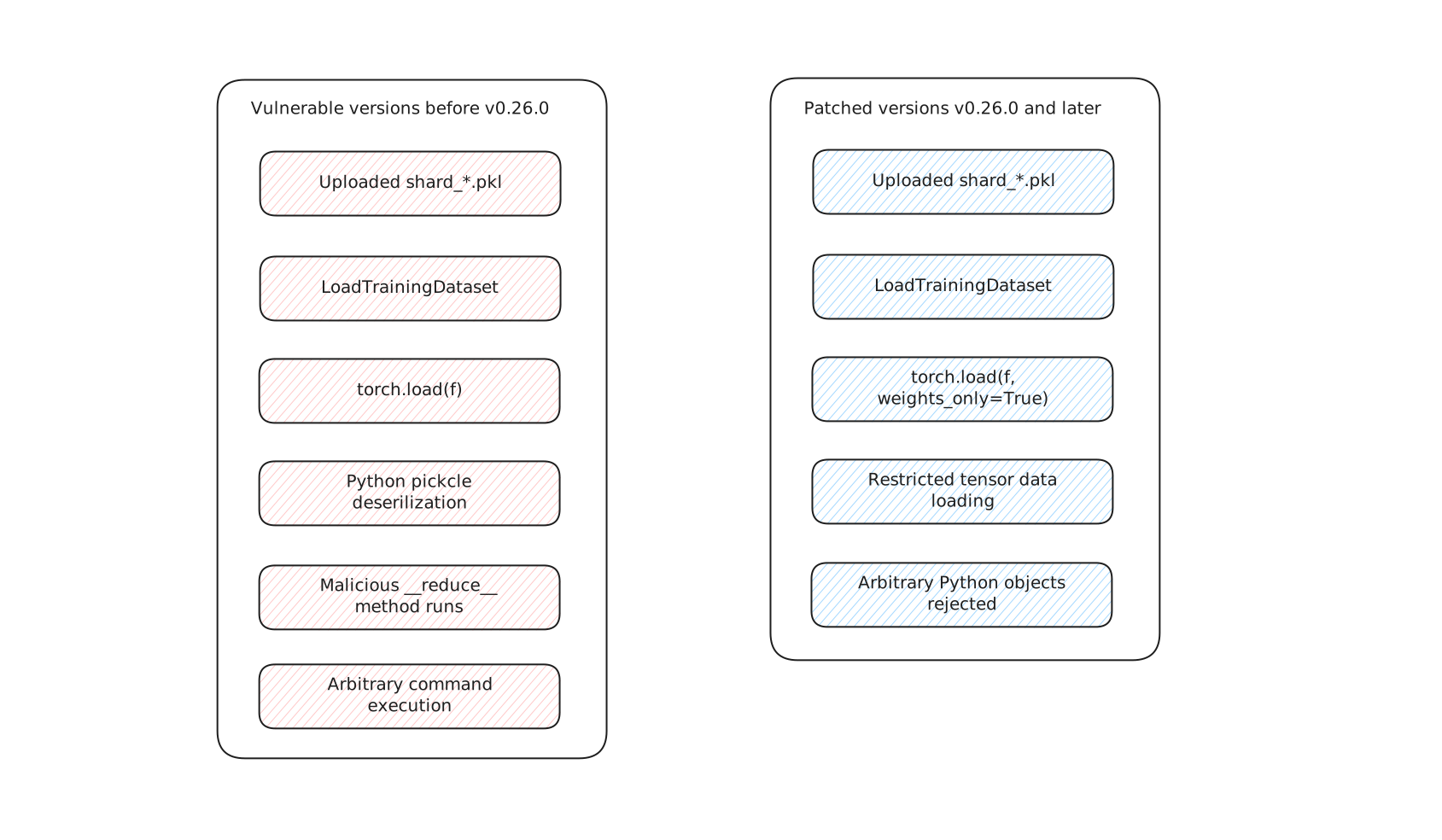
Fig 1: Trust boundaries crossed during exploitation
Attack Sequence
The attacker first needs network access to the ComfyUI HTTP service. No ComfyUI account or existing workflow permissions are required when the vulnerable endpoints are publicly reachable without an authentication layer.
A malicious file named like a training shard is uploaded using the image-upload endpoint. The attacker then submits a workflow graph containing the LoadTrainingDataset node and points it toward the uploaded shard.
When ComfyUI processes the workflow, torch.load() deserializes the pickle data. The attacker’s __reduce__ payload executes inside the ComfyUI Python process, inheriting its filesystem permissions, environment variables, network access, and access to connected storage.
Two HTTP requests later, the AI image server is doing something considerably less artistic.
Why This Is Especially Dangerous
A successful attacker may gain:
- Remote command execution without authentication
- Access to model files, workflows, prompts, outputs, and uploaded data
- Environment variables containing API keys or service credentials
- Access to shared storage mounted inside containers or GPU instances
- A foothold for persistence through startup scripts, scheduled tasks, or custom nodes
- Network access to other internal services reachable from the ComfyUI host
- Control of expensive GPU resources for cryptomining or other workloads
The highest-risk environments are Internet-facing ComfyUI deployments, shared research servers, hosted GPU machines, and reverse-proxied installations without authentication or strict access controls.
Affected Versions
| Branch | Vulnerable Versions | Fix Available |
|---|---|---|
| Official CVE range | ComfyUI through v0.23.0 | Upgrade to v0.26.0 or later |
| Additional upstream releases | v0.24.0 through v0.25.1 still contain the unsafe call | Upgrade to v0.26.0 or later |
| Patched releases | v0.26.0 and later | Already patched |
| Localhost-only installations | Vulnerable code may exist, but it is not remotely reachable from another host by default | Upgrade anyway |
The published CVE range currently stops at v0.23.0. However, upstream source for v0.24.0 and v0.25.1 still calls torch.load(f) without weights_only=True, while v0.26.0 is the first tagged release containing the patch.
Until the public range is corrected or clarified, treat all ComfyUI releases before v0.26.0 as affected.
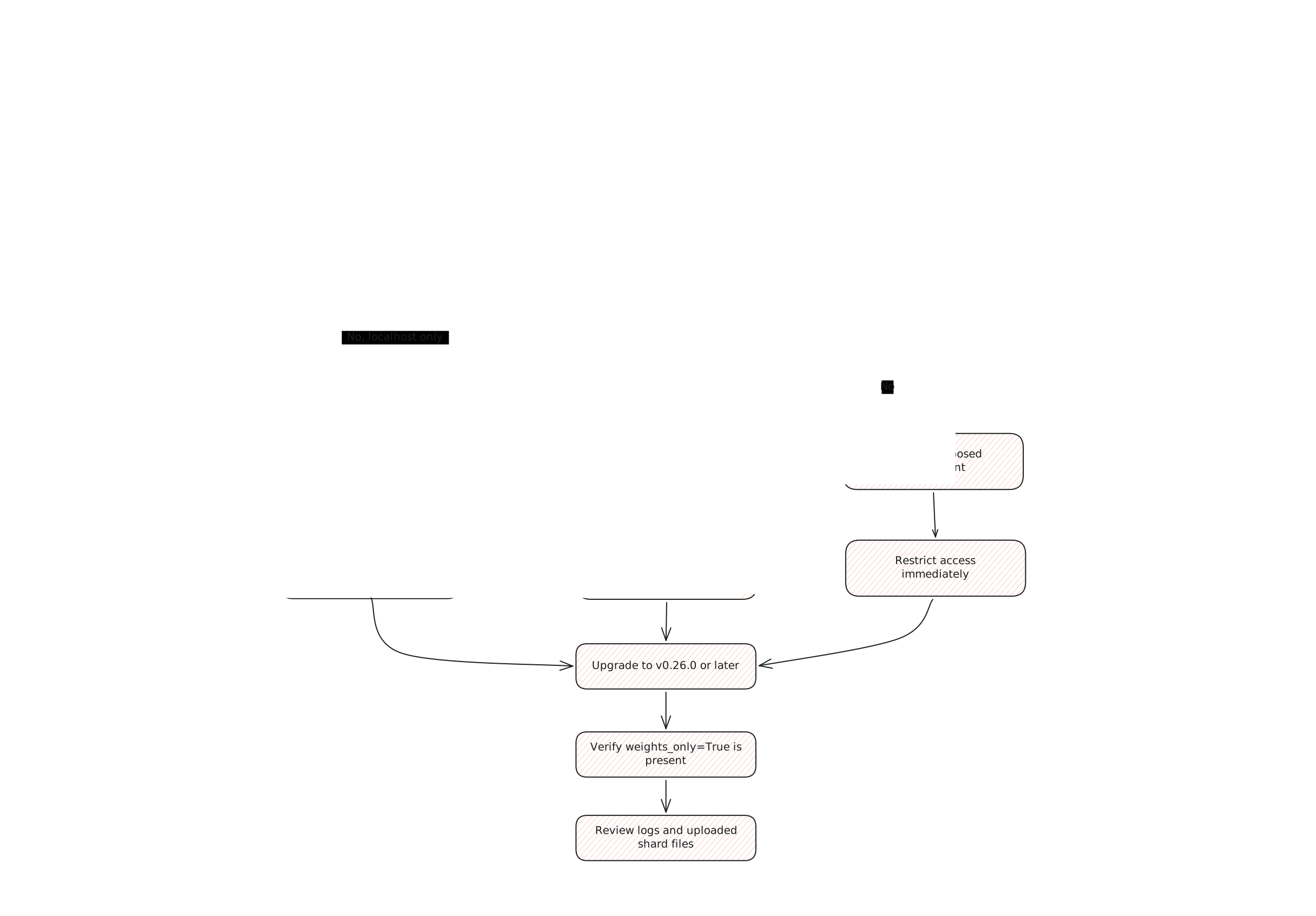
Fig 2: Vulnerable releases, patch integration, and CVE publication
Mitigations
1. Upgrade to ComfyUI v0.26.0 or later
Update using ComfyUI Desktop, ComfyUI Manager, or the installation method used for your deployment. Confirm that comfy_extras/nodes_dataset.py contains:
shard_data = torch.load(f, weights_only=True)2. Stop exposing ComfyUI directly to the Internet
Bind ComfyUI to 127.0.0.1 unless remote access is required. For remote deployments, place it behind a VPN or authenticated reverse proxy and restrict access by network or identity.
Do not publish port 8188 directly to the Internet.
3. Restrict the vulnerable API paths
As a temporary emergency measure, limit access to:
POST /upload/image
POST /prompt
Allow only trusted clients or internal networks. Blocking /prompt will disrupt normal API-based workflow execution, so this should not replace patching.
4. Disable dataset-loading functionality when unused
Remove access to the LoadTrainingDataset node or isolate training workflows until the server can be upgraded.
5. Investigate exposed vulnerable systems
If an affected instance was publicly accessible, review it as a potentially compromised host. Preserve logs, inspect spawned processes and recently created files, and rotate secrets accessible to the ComfyUI process.
Indicators of Compromise
No public file hashes, command-and-control domains, attacker IP addresses, or confirmed payload signatures were available as of August 3, 2026.
Defenders should hunt for behavioural indicators instead.
On the device
- Unexpected
shard_*.pklfiles in ComfyUI-managed directories - Python or ComfyUI spawning shells, PowerShell,
curl,wget, miners, or unfamiliar binaries - Recently modified startup scripts, custom nodes, shell profiles, SSH keys, or scheduled tasks
- New files created shortly after dataset-loading workflows were executed
- Unexplained GPU, CPU, or outbound network activity
In traffic logs
- A
POST /upload/imagerequest followed shortly byPOST /promptfrom the same source - Multipart uploads containing filenames matching
shard_*.pkl - Workflow graphs invoking
LoadTrainingDatasetunexpectedly - Requests to port
8188from unfamiliar external addresses - Large or unusual outbound connections originating from the ComfyUI host
Configuration integrity
- Unexpected use of
--listenor binding to0.0.0.0 - Public reverse-proxy routes added without authentication
- Recent firewall or container port-publishing changes
- Modifications to
comfy_extras/nodes_dataset.py - Newly installed or modified custom nodes
Continue monitoring the NVD record, ComfyUI repository, and security advisories for updated IoCs or confirmation of successful exploitation.
References
- NVD - CVE-2026-68771
- VulnCheck - ComfyUI Unauthenticated RCE via Pickle Deserialization
- ComfyUI Patch Commit 94ee49b
- ComfyUI Pull Request 14543
- ComfyUI v0.26.0 Release
- Rapid7 - CVE-2026-68771
- IONIX Threat Center - CVE-2026-68771
- Feedly CVE Overview - CVE-2026-68771
- MITRE - CWE-502: Deserialization of Untrusted Data